

Tropical Plants For North Texas
Thinking of calculation new trees to your landscape? Consider using Texas native copse. Keep reading to learn why.
Why plant native trees?
In that location are numerous benefits to planting native trees. A few of the near impactful are:
- Native trees utilise less water and crave less
fertilizer and pesticides because they are well-suited to Due north Texas conditions. - They provide a sense of place and give u.s.a. the feeling of belonging to where we are.
- Native trees create habitats that provide food and shelter for wildlife.
- Less maintenance,
fertilizer , and pesticide is required.
Exploring native tree options
There is a lot of good data on Texas native plants and copse online. You just have to know where to look.
The Native Plant Society of Texas offers a wealth of resources to the full general public on their website. 1 of the most useful resources is a collection of native plant lists by region.
The N Central Texas constitute list includes over 35 different native copse, both shade and ornamental, that are suitable for the area.
For a searchable database, bank check out the Ladybird Johnson Wildflower Eye's collection of recommended native plant species for N Primal Texas: here. You can filter by found type to find trees.
Important things to consider
Before selecting or planting a native tree on your property there are some things that you volition need to keep in mind.
1. Proper spacing and location.
When researching trees for your property, look at a tree's expected height and spread at maturity. This data will aid y'all plan the ideal location for the tree so that it's non too close to your habitation, power lines, or other trees and plants.
The NPSOT constitute list includes height and spread data for each tree. We've also listed spread in our list of recommended trees below.
2. Be aware of the bug surrounding oaks.
According to the Texas A&Thou Forest Service, oak wilt is i of the well-nigh destructive tree diseases in the U.Southward., killing millions of trees in 76 counties of Central, Northward and West Texas.
Trees in the red oak family like Texas red oak and shumard oak are the most susceptible to oak wilt. White oaks like Chinquapin, post, and bur are the least susceptible. Members of the willow oak family, similar the live oak, fall somewhere in the center.
Because the oak wilt fungus spreads through new wounds, it is imperative that yous avoid pruning oak trees between Feb and June at all costs, and all wounds demand to be painted. You tin acquire more most oak wilt here.
three. Know the risk posed by emerald ash borer.
This tiny dark-green beetle is causing massive devastation. Detected in both Tarrant and Denton counties, the emerald ash tapping feeds on ash copse and has killed hundreds of millions of trees in 35 states beyond the country.
The best way to forbid its spread is to never move firewood. even in-state; use it where its harvested.
List of native and sustainable trees
We compiled a list of nine of the best native shade and ornamental trees for North Texas that were selected for their beauty and, most importantly, sustainability. Although at that place are many native tree options, non all of them are necessarily eco-friendly ones.
All of the copse listed below are rated a x out of ten on the Globe-Kind Alphabetize that measures a plants oestrus tolerance, drought tolerance, pest tolerance, soil requirement and fertility requirement based on region.
Note: Shade trees are defined as trees taller than 20 feet. Ornamental copse are 10 to 20 anxiety in height.
| Ashe Juniper (Shade) This evergreen juniper can be a large shrub or small to medium tree, if trained, and creates an excellent habitat for wild fauna. Grows up to twenty anxiety loftier and 20 anxiety wide with excellent qualities for screening. | 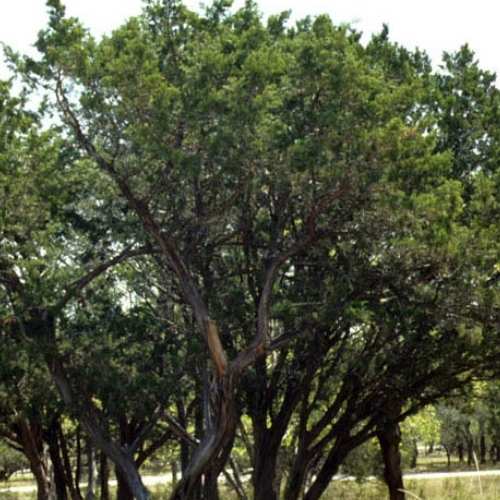 * * |
| Bald Cypress (Shade) A very long-lived, deciduous tree with uniquely bright greenish, needle-like foliage that turns a dramatic rust shade in the autumn. If planted most water, volition develop "knees". Grows between 50 and lxx feet in the mural with a 20 to 30 anxiety spread. | 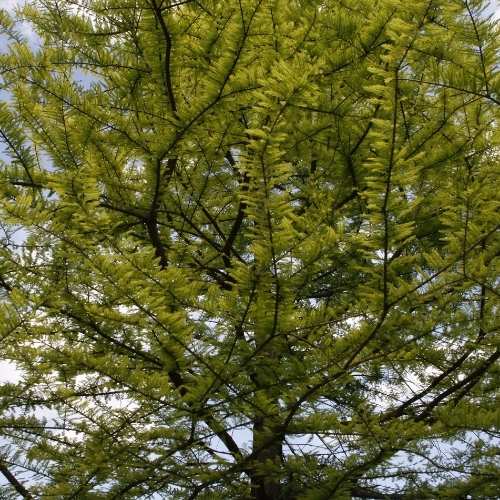 |
| Chinquapin Oak (Shade) An underused shade tree that boasts high estrus and drought tolerance. Grows up to 60 anxiety tall and 60 feet wide. More resistant to oak wilt than other oaks only still susceptible. | 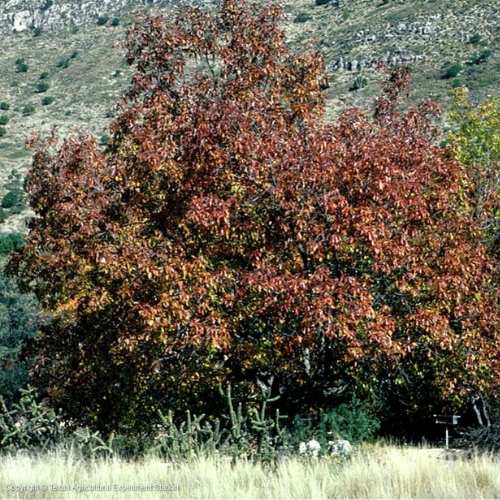 * * |
| Desert Willow (Ornamental) A small-scale tree boasting orchid-like blossoms and an blusterous, open up form with willow-like foliage. Grows up to 20 anxiety loftier and twenty anxiety wide. Requires a full lord's day exposure. | 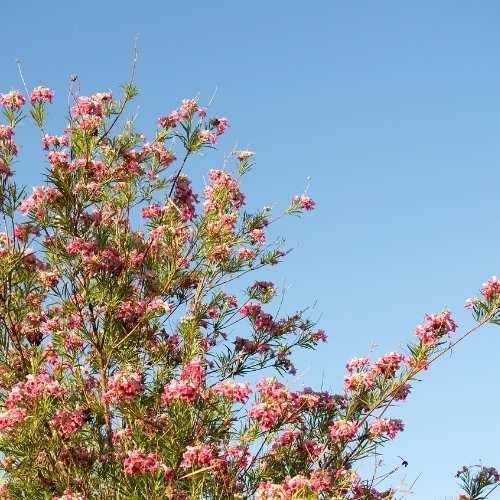 |
| Eve's Necklace (Ornamental) Deciduous ornamental with flowers in the spring and fruit pods that resemble a necklace. Tolerant of poorly draining soils with excellent heat and drought tolerance. Will as well tolerate partial shade. Can grow 15 to 25 anxiety in pinnacle, x to 15 foot spread. | 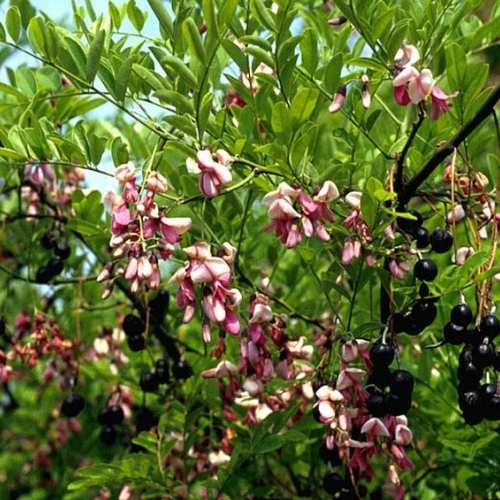 * * |
| Honey Mesquite (Shade) Traditionally considered a nuisance in pastures, experts agree that the mesquite tree's bad reputation is the result of overgrazing and burn suppression. Mesquite trees are the most drought tolerant Northward Texas tree capable of providing shade. Plus, the stake yellow flowers that bloom in spring are an important source of nectar for pollinators. Thorns are prevalent on young plants, just the potential for use equally a sustainable landscape option in North Texas is exciting despite being hard to observe in nurseries. Up to 30 feet high and wide. | 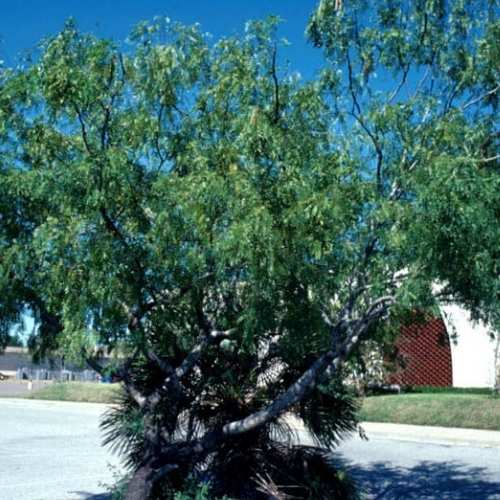 * * |
| Mexican Buckeye (Ornamental) A deciduous, multi-trunked tree with dramatic, hot pinkish flowers similar to red bud trees. Needs soil that drains well, only is very heat and drought tolerant. Averages 12 anxiety tall with a 10 foot width. | 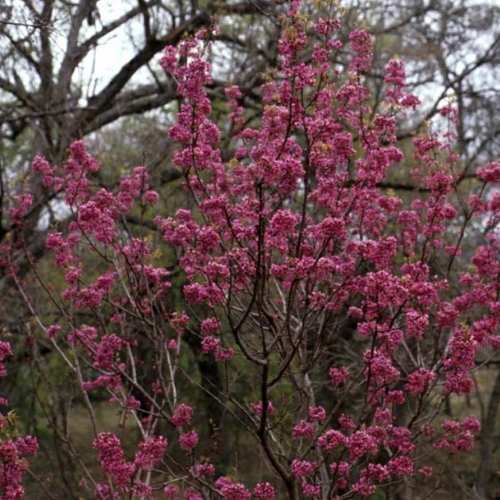 * * |
| Shumard Oak (Shade) Considered one of the all-time oaks for Texas landscapes with red fall leafage. Grows up to 60 feet loftier and 50 feet wide. Less susceptible to oak wilt but nonetheless at risk. | 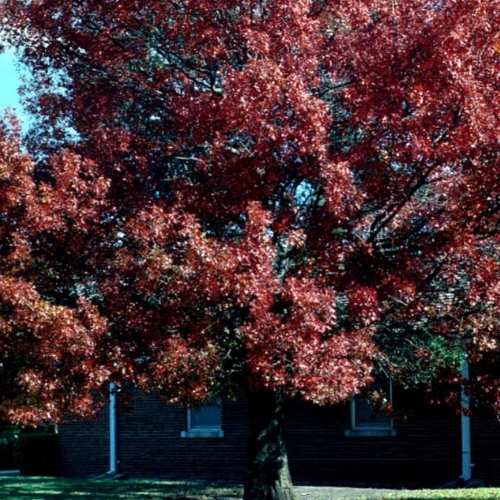 * * |
| Southern Magnolia (Shade) This is a classic southern tree with big. night light-green, glossy leaves and 12-inch white, fragrant flowers in jump and summer. Makes an excellent screen equally lower limbs will remain in identify unless pruned upward. Cones will driblet to the ground, but their clean-up is the minimum maintenance required. Grows up to twoscore anxiety alpine in Northward Texas with a 30 pes spread and is very rut and drought tolerant. | 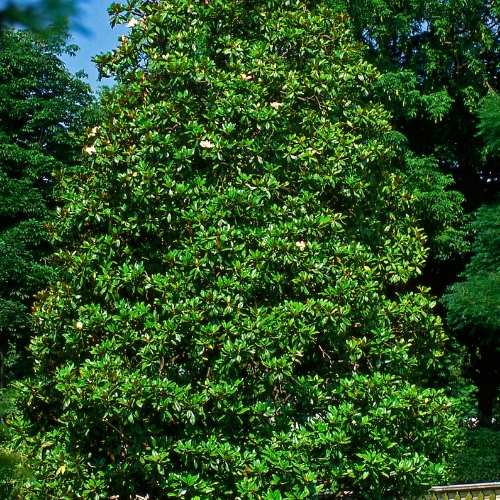 |
Are your favorites missing from this list?
There are a lot of classic, native North Texas trees missing from our list. Most of the excluded trees weren't up to snuff in the sustainability department. Others were actual hazards.
The near misses
The short-list of copse once included Eastern Ruddy Cedar. It'southward a 10 out of 10 on the Earth-Kind index, but received poor ratings for high flammability (yikes) and is an culling host for the fungal disease cedar-apple rust. As a issue, information technology didn't make the last cut, even though it makes a smashing privacy screen.
Another noticeably absent native is the Texas state tree itself: the pecan. Despite information technology'south esteemed designation, the pecan gets low marks for sustainability considering of disease susceptibility, high fertility requirements, and moderate water needs. Futhermore, no one wants to take a barefoot stroll on the lawn only to pace on a croaky pecan beat out.
Additional resource
Dallas Morn News: "Native mesquite gets a serious look for landscapes"
World-Kind Institute and Tree Selector past region
Native Plant Society of Texas Northward Central Texas Plant List
Texas Invasives Website: Emerald Ash Borer
Texas A&1000 Agrilife: Accept steps to preclude the spread of oak wilt this spring
Earth-Kind Landscaping
Editor's notation
A fundamental tenet of the Dallas Garden School mission is to create educational opportunities through community collaboration. Every bit such, we invite (and appreciate) informed, thoughtful, and well-researched contributions to whatever of the information we nowadays here or through other media outlets. Is there a tree nosotros conspicuously missed? Let us know why in the comments below. We look frontward to elevating all voices of the North Texas gardening and landscaping customs. (Include sources!)
- Author
- Recent Posts

Founder of The Dallas Garden School, Callie has 15 years of gardening experience and horticulture instruction. She specializes in growing food, modest-space gardening, managing community gardens, and plant propagation. She has an MBA from Southern Methodist University, a articulation Business organization-Spanish caste from Skidmore College, and served as a horticulture intern for the Dallas Arboretum & Botanical Gardens. Callie is a fellow member of the Native Plant Society of Texas, The Herb Society of America, the National Garden Agency, and is a Certified Texas Master Gardener.

Tropical Plants For North Texas,
Source: https://thedallasgarden.com/9-of-the-best-native-trees-for-north-texas/
Posted by: ocasiogrou1983.blogspot.com
0 Response to "Tropical Plants For North Texas"
Post a Comment