

When Was Mary Musgrove Born
Mary Musgrove
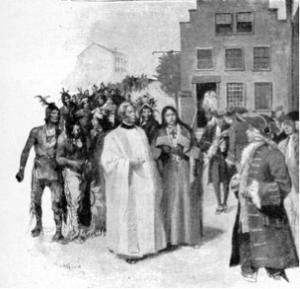
As the daughter of an English trader and a Native American adult female, Mary Musgrove was able to empathise many cultures . Her mixed heritage and language skills allowed her to become a negotiator between English and Native American communities. She is about commonly known for playing an important part in the development of Colonial Georgia. She is also known for her business knowledge as a trader and interpreter.
Mary Musgrove was built-in around 1700 in Coweta, Creek Nation. She was given the name Coosaponakeesa at birth past her Native American female parent. Her mother was related to many of the prominent leaders in the community. Her brother was the chief of Coweta. Musgrove grew upwardly learning to speak the Creek language of Muskogee and the cultural traditions of Creek Natives. Musgrove also spent much of her childhood in Due south Carolina. Her begetter, Edward Griffin, took her and her younger brother to a small boondocks in South Carolina called Pon Pon when she was about seven years one-time. In Pon Pon, Musgrove learned English language and changed her proper noun to Mary. In 1717, Mary got married to an English trader named John Musgrove. They had three children, but all died very young. Mary and John Musgrove ready a trading post near the Savannah River shortly after they were married where Mary served as a skilled interpreter. Her business caught the attending of General James Oglethorpe, one of Georgia'due south charter members. General Oglethorpe hired Musgrove as his primary interpreter. She worked for him from 1733 to 1743. Two years into her work with Full general Oglethorpe, Mary'southward husband John Musgrove died.
At the time of her husband'due south decease, John Musgrove owned their land in S Carolina. He also endemic 500 acres in Georgia that included their trading post, business firm, and moo-cow pen on Yamacraw Bluff. Due to Georgia laws, Mary was only permitted to hold the country until her oldest son could take over the land equally possessor. However, all of her sons died. Historian Michael D. Greenish concludes that Musgrove married her second hubby, Jacob Matthews, in 1737 because she was in danger of losing her property. Matthews was i of her indentured servants and was many years younger than she was. Musgrove was then immune to keep her property. The new couple started some other trading post in Mount Venture on the Altamaha River. Musgrove continued to work as an interpreter for General Oglethorpe. She helped maintain peaceful and fair merchandise relations between the new Georgia Colony and the Creek Nation. During her time in Yamacraw Barefaced, she successfully negotiated relations between the Yamacraw Chief, Tomochichi, and the Savannah settlers. Unfortunately, Musgrove'south second husband Matthews died in 1742.
Two years later on, Musgrove married Christian missionary Reverend Thomas Bosomworth. This marriage came with a rise in social form. Musgrove and Reverend Bosomworth opened a second trading post on the Altamaha River in 1746. They continued to serve as cultural mediators. Musgrove and her husband traveled to Native American communities with messages from General Oglethorpe and the English Male monarch and they would return with the speeches and concerns of the Native American communities. Sometimes, they taught Christian missionaries the Muskogee language to assistance with their interactions. Still, Musgrove and Reverend Bosomworth faced a trouble when the Lower Creek Primary Malatchi gave them three islands. These 3 islands, Ossabaw, Sapelo, and St. Catherines, were known as the "Body of water Islands" that belonged to the Creeks. British officials refused to award Musgrove'due south merits to the land. They stated that a nation tin can only grant land to another nation, not to an private. Musgrove fought this determination. In 1749, over 200 Creek people went with her to Savanah to petition Georgia officials. When they refused her claim, she went to England to plead her case before the Board of Trade. The Board referred her case back to the Georgia courts. When she arrived back home, Georgia had taken control of her state. Decades afterwards, royal governor Henry Ellis compromised. He granted Musgrove St. Catherines Isle and £2,100, when she released her claims to the other ii islands. Musgrove continued to serve as a mediator between Georgia and Creek nation until her death on St. Catherines Island effectually 1763.
- Baine, Rodney K. "Myths of Mary Musgrove."The Georgia Historical Quarterly 76, no. 2 (1992): 428-35. http://www.jstor.org/stable/40582545.
- Frank, Andrew K. "Mary Musgrove (ca. 1700-ca. 1763)." New Georgia Encyclopedia. September 8, 2018. https://world wide web.georgiaencyclopedia.org/articles/history-archaeology/mary-musgrove-ca-1700-ca-1763.
- Georgia Historical Lodge. "Mary Musgrove." Accessed January 15, 2019. https://georgiahistory.com/education-outreach/online-exhibits/featured-historical-figures/mary-musgrove/.
- Perdue, Theda, ed.Sifters: Native American Women's Lives. Oxford: Oxford University Press, 2001.
Photo:
- Mary Musgrove (ca. 1700 – ca. 1763). GHS Print Collection Georgia Historical Society - https://georgiahistory.com/wp-content/uploads/2013/04/mary-musgrove.jpg
MLA - Alexander, Kerri Lee. "Mary Musgrove." National Women'southward History Museum. National Women'due south History Museum, 2019. Date accessed.
Chicago - Alexander, Kerri Lee. "Mary Musgrove." National Women'south History Museum. 2019. world wide web.womenshistory.org/instruction-resources/biographies/mary-musgrove.
- PBS. "Mary Musgrove, A Georgia Biography." May ii, 1996. https://www.pbs.org/video/georgia-stories-mary-musgrove-georgia-biography/.
Biography
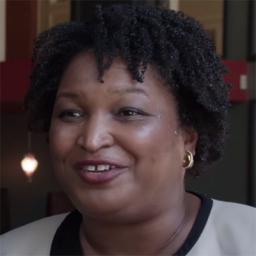
Stacey Abrams
Abrams is now i of the near prominent African American female politicians in the U.s.a..
READ More than
Biography
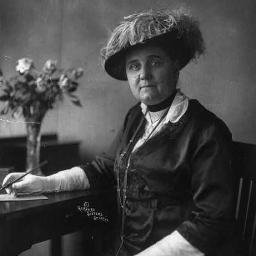
Jane Addams
A progressive social reformer and activist, Jane Addams was on the frontline of the settlement house movement and was the first American woman to win a Nobel Peace Prize.
READ MORE
Biography
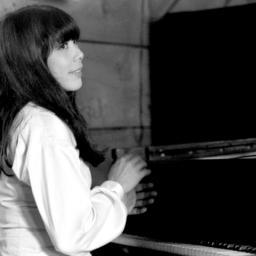
Toshiko Akiyoshi
Toshiko Akiyoshi changed the face of jazz music over her sixty-twelvemonth career. As one of few women and Asian musicians in the jazz earth, Akiyoshi infused Japanese civilization, sounds, and instruments into her music.
READ More than

When Was Mary Musgrove Born,
Source: https://www.womenshistory.org/education-resources/biographies/mary-musgrove
Posted by: ocasiogrou1983.blogspot.com
0 Response to "When Was Mary Musgrove Born"
Post a Comment