

Where Is The Epigastric Region
The belly is the largest portion of the torso and too has the largest cavity with the nigh amount of organs within information technology. There are a host of problems that tin can arise in the abdominal cavity and with the dissimilar organs crammed inside it, it is sometimes difficult to identify an exact cause of symptoms. Oftentimes the approach to determining the cause of symptoms, like pain, is to first isolate the region in the abdomen from where information technology arises.
What is epigastric hurting?
Epigastric pain is any discomfort, tenderness or pain that arises from the upper eye portion of the belly. This expanse is known as the epigastrium when dividing the abdomen into nine equal regions. The pain may vary in nature (sharp, cramping, burning, and so on) and intensity (from balmy to severe) depending on the underlying cause besides as the individual perception and tolerance of pain.
The causes of epigastric pain is often related to the digestive organisation. All the same, at that place are instances where epigastric pain may exist misleading. Although the region is mainly occupied by digestive organs, in some cases epigastric pain may be due to a problem with the middle, the lining around information technology or the diaphragm (apartment muscle sheet that divides the chest and abdomen). In other instances epigastric pain may be referred pain originating elsewhere in the abdomen.
Organs in the Epigastrium
There intestinal regions are non compartmentalized internally, meaning that an organ in one region may extend into another. A change in body position tin can also displace organs to a slight degree. When it comes to the epigastrium the following are the chief organs to occupy this region:
- Liver
- Pancreas
- Gallbladder and bile ducts
- Breadbasket
- Duodenum (small intestine)
- Abdominal aorta
However, information technology is important to note that only a portion of these organs sit down in the epigastrium. For case, most of the stomach lies in the left hypochondriac region with the end portion (pylorus) extending into the epigastrium. It is also important to consider problems with the abdominal wall which may be the source of the pain.
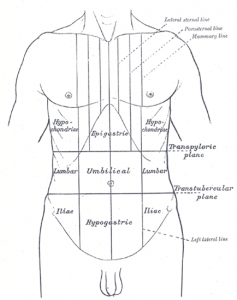
Causes of Epigastric Pain
Based on the organs lying in this region, epigastric pain is therefore usually due to liver, pancreas, gallbladder, bile duct, stomach, duodenum and/or abdominal aorta conditions. While diseases of these organs should kickoff be investigated, the presence of other signs and symptoms may also warrant investigating other organs exterior of the epigastrium.
Read more on upper middle abdominal hurting.
Liver and Gallbladder
Although liver hurting is generally associated with the correct upper quadrant information technology can sometimes exist felt in the midline, within the epigastric region. Waste and other byproducts from the liver are excreted through bile which is stores in the gallbladder temporarily. The pain with most gallbladder weather are more than centrally located within the epigastrium only may also exist slightly towards the right of the midline.
Symptoms associated with liver and gallbladder conditions includes:
- Nausea and airsickness
- Loss of appetite
- Jaundice
- Change in body weight
- Diarrhea
Some of the atmospheric condition that may give rise to this liver pain includes:
- Hepatitis which is inflammation of the liver. Most cases are due to viral infections although certain toxins including booze and autoimmune conditions can also crusade hepatitis.
- Gallstones are tiny hard masses that form within the gallbladder from bile. It tin and so become obstructed in the gallbladder duct or bile duct. Sometimes stones can form in the bile duct.
- Cholecystitis is inflammation of the gallbladder that may occur with gallstone or infections. Cholangitis is inflammation of the bile duct usually due to an infection.
- Cancer is where a malignant growth develops in the liver or gallbladder, or spreads from elsewhere in the body to the liver by mode of the bloodstream, lymphatic system or direct spread (metastasis).
- Benign liver tumors similar a hepatic adenoma develop when the liver cells multiply excessively to form a mass. It is not cancerous.
- Liver abscess is where pus collects within the liver tissue and is often associated with an infection of the liver or in and effectually the liver within the abdominal cavity.
- Bile duct or liver cysts are fluid filled masses that class in an effectually the bile duct or liver. The crusade is not e'er known although one type, a hydatid cyst, may be due to a liver parasite infestation.
- Acute liver failure may present with pain depending on the cause although chronic liver failure is usually painless.
- Fat liver disease is a condition where there is extensive fat tissue within the liver and is usually non due to booze or drub abuse. It is mainly linked to obesity. It is unremarkably painless.
- Other:
– Portal vein thrombosis
– Hepatic vein obstacle
– Hepatic artery occlusion
Read more on liver diseases.
Pancreas
The pancreas is a long gland that extends beyond the midline of the upper abdomen. The location, nature and severity of pancreatic pain depends on the part of the organ that is affected and the underlying disease. Other symptoms include:
- Nausea and vomiting
- Loss of appetite
- Pain extending to the dorsum
- Abdominal tenderness
These symptoms are mainly due to the post-obit weather:
- Pancreatitis which is inflammation of the pancreas usually due to enzymes that actuate within the pancreas and damages pancreatic tissue. It can be acute or chronic.
- Pancreatic cancer where a malignant growth develops in the pancreas. Information technology is usually associated with chronic pancreatitis and alcoholism.
- Pancreatic cysts are enclosed fluid-filled sacs within the pancreatic tissue. Some can be present from birth (congenital) or may be cancerous. Pseudocysts are the more common type.
- Trauma to the pancreas tin arise with blunt or sharp force injury to the abdomen. A blow to the belly like with an assail, contact sports or car accident are some of the more common causes.
Read more on pancreas problems.
Stomach and Duodenum
Hurting in the stomach and duodenum is usually described as burning or gnawing in nature. Information technology tends to be worse during and later on eating or when hungry. Some of the possible conditions that may requite rise to epigastric pain includes:
- Gastritis is inflammation of the stomach that is ordinarily associated with excessive use of NSAIDs and H.pylori infection. The inflammation can extend to the lower end of the esophagus and the duodenum.
- Peptic ulcers are open sores that form in the walls of the tummy or duodenum. It is oftentimes preceded by severe inflammation that leads to erosion of the wall.
- Cancer of the stomach or duodenum is non uncommon. These cancerous growths may ofttimes involve the other due to the close proximity.
Read more on tum bug.

Where Is The Epigastric Region,
Source: https://www.healthhype.com/epigastric-pain-causes-diseases-location-and-symptoms.html
Posted by: ocasiogrou1983.blogspot.com
0 Response to "Where Is The Epigastric Region"
Post a Comment