

Life Expectancy Of A Monkey
Monkeys and other primates are the closest relatives to humans. They age slowly and similarly to humans besides. Information technology'southward interesting to run across how their lifespans compare to ours.
For instance, the oldest known monkey is a spider monkey named Elvis. Impressively, Elvis just recently turned sixty years old.
Smaller, Prosimian monkeys have the shortest lifespans. Their average lifespans are nearly 10-15 years. On the other mitt, Old Earth monkeys live the longest, with lifespans of up to thirty years.
But exactly how long do monkeys live? Does their size and location in the world accept a role to play? Which monkeys live the longest? The shortest? Go on reading, and we'll explore each of these questions.
How Long Practise Monkeys Live?
Have you ever wondered how long do monkeys alive? How long a monkey lives is really going to depend on the species. Some monkeys simply alive for virtually ten-fifteen years, while others can alive up to xxx years.
The Life Bicycle Of A Monkey
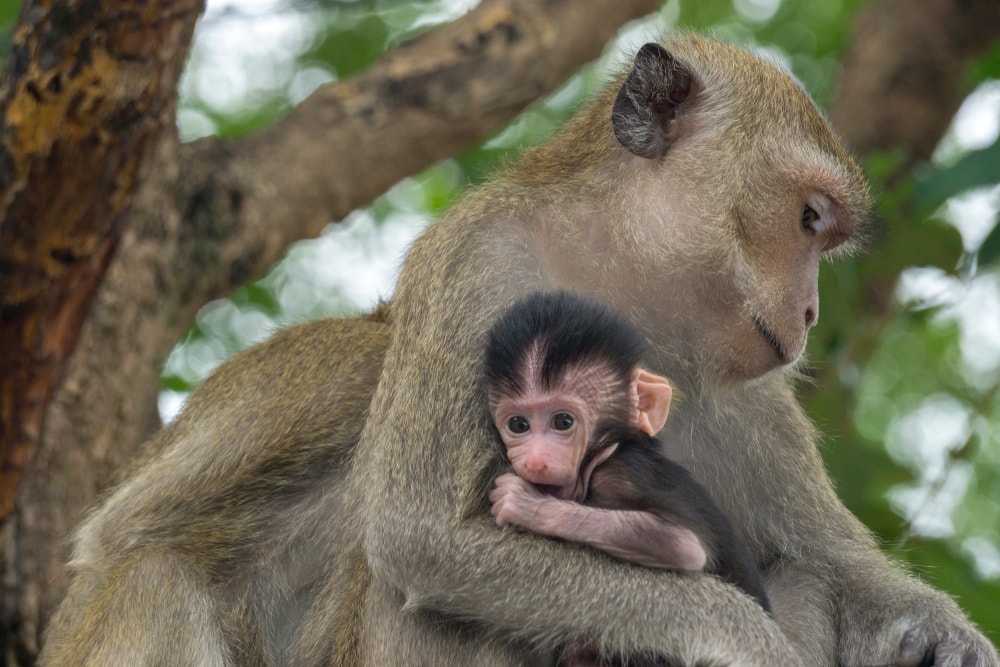
All primates tend to have the aforementioned bones life cycle. This includes humans, apes, and monkeys.
Monkeys have iii stages in their life bicycle: gestation, infanthood, and adulthood.
Depending on the species, gestation can concluding anywhere from 4-8 months. Once mating has occurred, the mother will give birth to i to three babies. A single infant is the most common, and information technology is uncommonly rare for a female parent to give birth to more one infant.
Almost infants nurse and stay with their mothers for about i twelvemonth. But this number varies between species.
Infants experience growth spurts in terms of summit and weight. In monkeys, growth spurts occur at a younger historic period and last for a shorter catamenia.
The juvenile stage will then last anywhere from 18 months to 8 years.
Primates go through delayed puberty, dissimilar nigh mammals. Puberty does not brainstorm until growth is nearly consummate.
As they age, females will stay in the family grouping for the residual of their life. Males volition get out their family group to form a group of other immature bachelors. They will stay in these bachelor groups until they reach sexual maturity. Then, they will get the leader of their ain grouping.
A monkey becomes an adult when it reaches sexual maturity. Depending on the species, this may occur anywhere between xviii months and 8 years of age.
About species live in groups headed by a unmarried dominant male. The rest of the grouping consists of females and their young offspring.
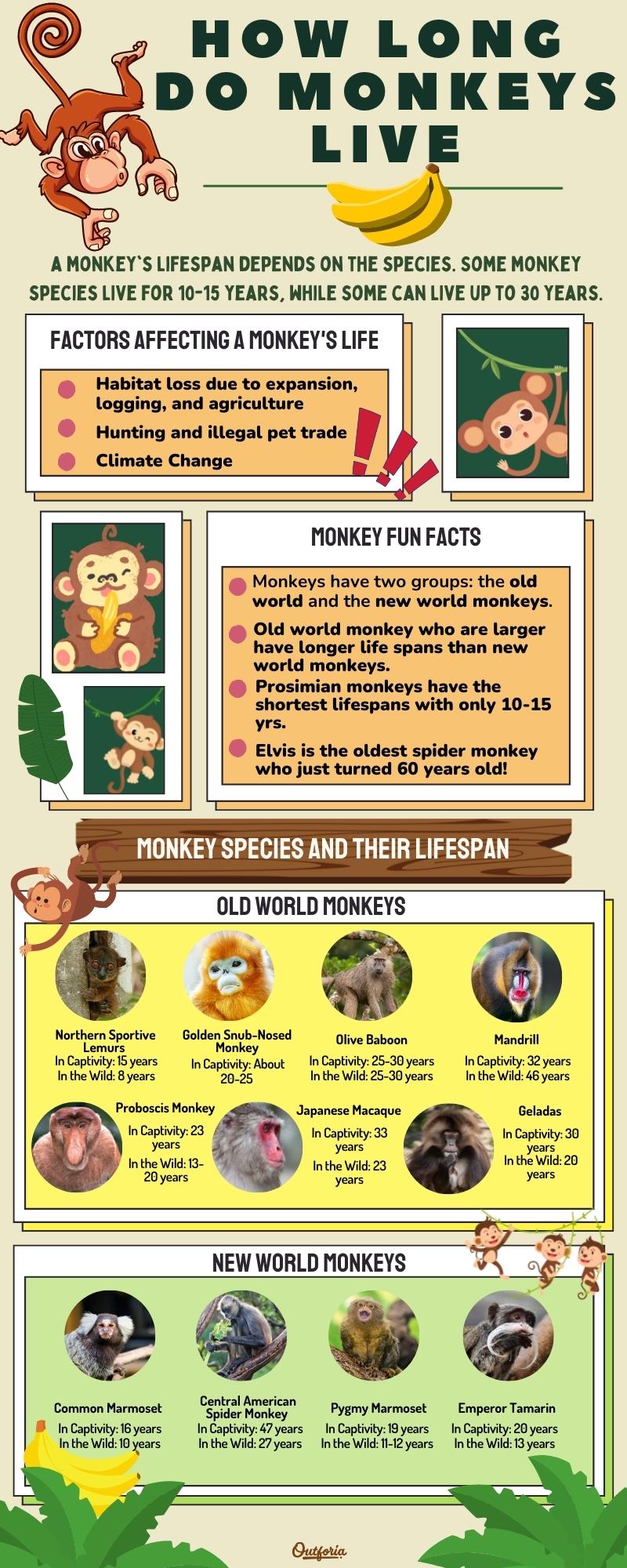
<a href="https://outforia.com/how-long-practice-monkeys-alive/"><img style="width:100%;" src="https://outforia.com/wp-content/uploads/2022/08/how-long-do-monkeys-live-infographic.jpg"></a><br>how long do monkeys live <a href="https://outforia.com">Outforia</a> Monkey Lifespans
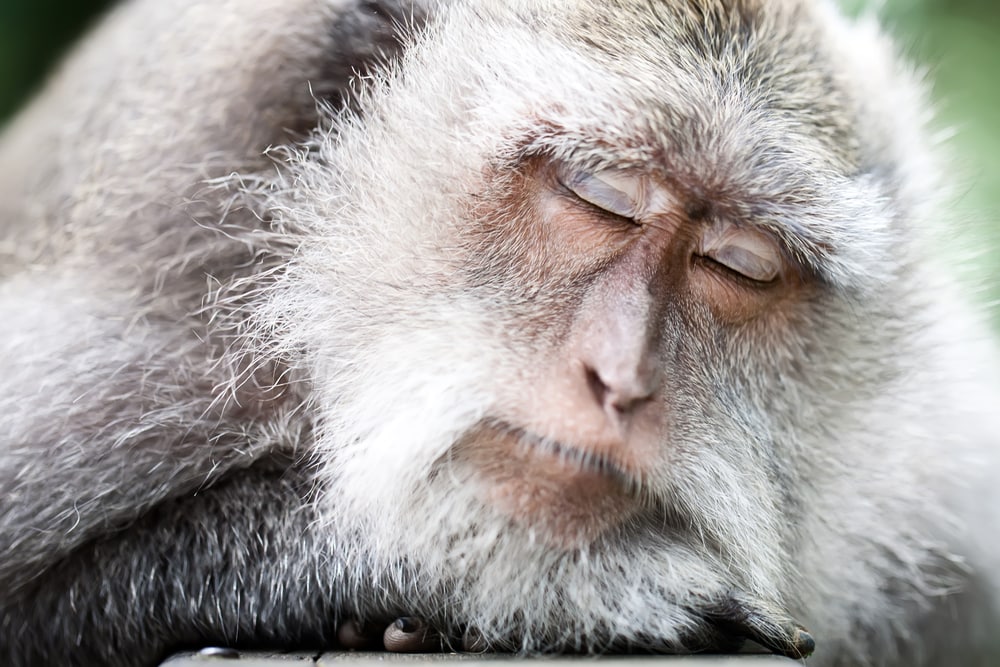
Monkeys have very different lifespans depending on their species. Generally, they volition live anywhere between x-30 years. The Onetime World monkeys, who are larger, tend to have longer lifespans than New World monkeys.
In this list, I accept included some of the nearly interesting monkeys. Nonetheless, there are about 260 species of monkeys worldwide, so this listing is very small. If yous'd like to larn nigh other monkey species, check out this wonderful commodity.
Onetime Earth Monkeys
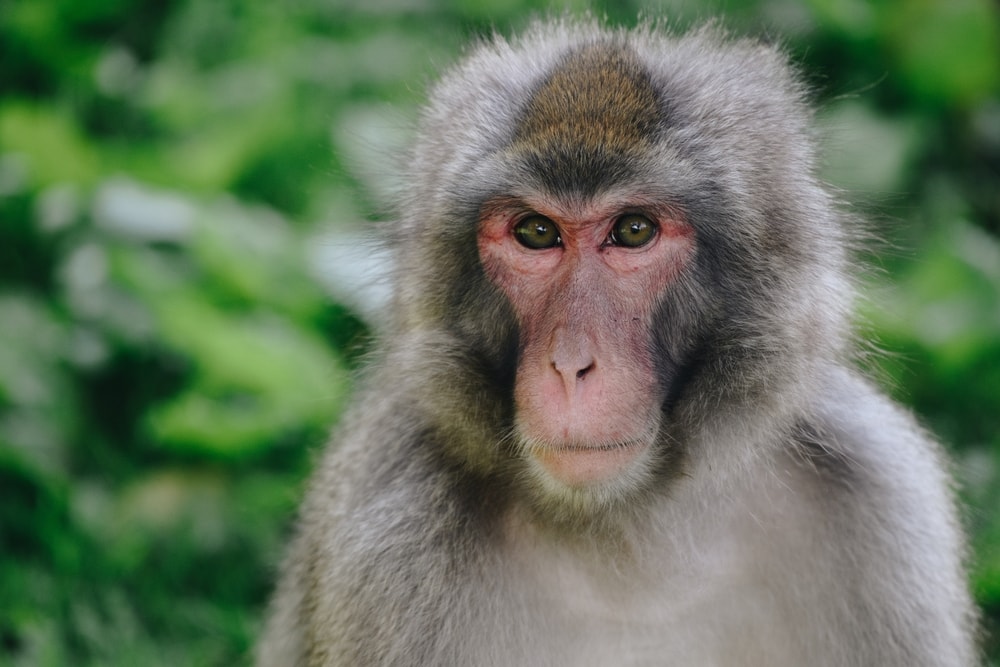
Monkeys consist of 2 groups: the erstwhile world and the new world monkeys.
Old World monkeys live across Asia and Africa and are larger in size. They conduct flat but sharp fingernails on their easily. Their nostrils are usually narrow and pointing downward. Their buttocks also feature padding but are hairless.
Quondam World monkeys may alive both on land and in the trees. Interestingly, they are only able to encounter in blackness and white.
Prosimians — The Shortest-Lived Monkeys
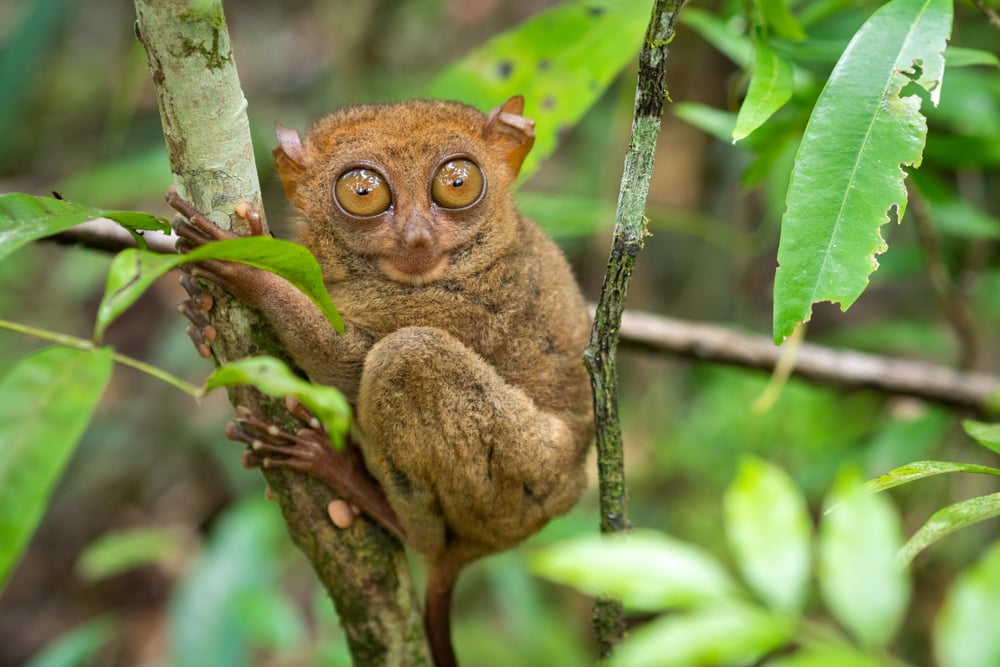
Prosimians are a grouping of monkeys who develop rapidly. They accept very brusque lifespans compared to other monkeys. This group includes lemurs, bushbabies, lorises, and tarsiers.
1. Northern Sportive Lemurs (Lepilemur septentrionalis) — World'southward Rarest Lemur
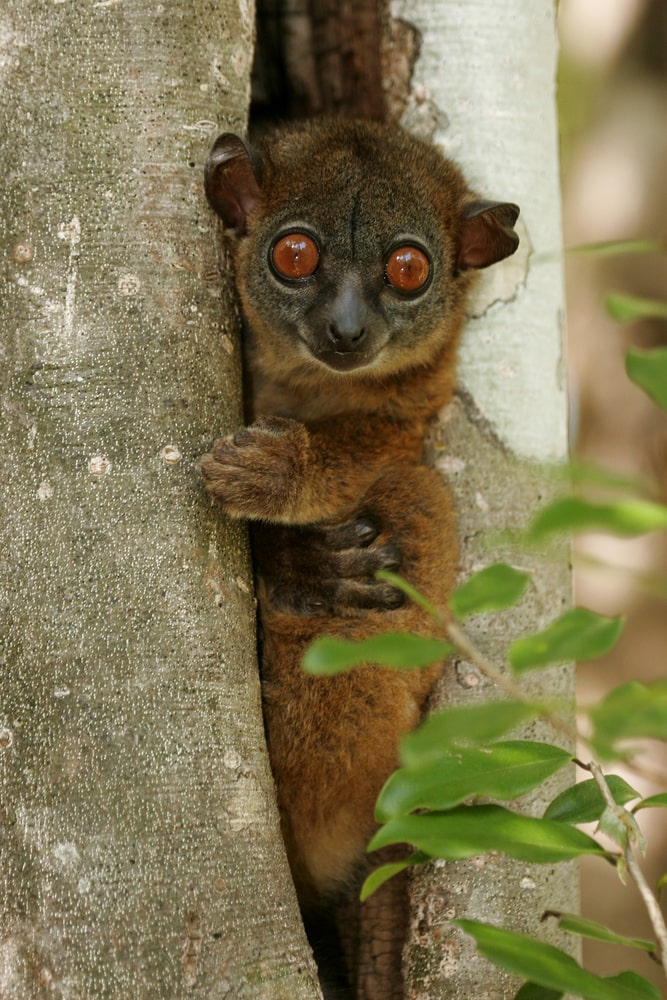
The northern sportive lemurs are the rarest monkey in the world. The Primate Specialist Group of IUCN's Species Survival Commission (SSC), Bristol Zoological Society, the International Primatological Guild (IPS), and Conservation International (CI) have put together a list of the 25 most endangered primates.
The Hainan gibbon, which is more of an ape than a monkey, is at the top of this list. The Northern sportive lemur comes in at a close second. Researchers believe that at that place are simply most 50 individuals left residing in Madagascar.
These lemurs are i of the smallest lemur species. They have less prominent ears than other lemurs. Their fur is gray-brown. They adopt to stand in an upright posture. This allows them to display their hands and feet when clinging to trees.
Lifespan
- In Captivity: 15 years
- In the Wild: 8 years
2. Gilded Snub-Nosed Monkey (Rhinopithecus roxellana)
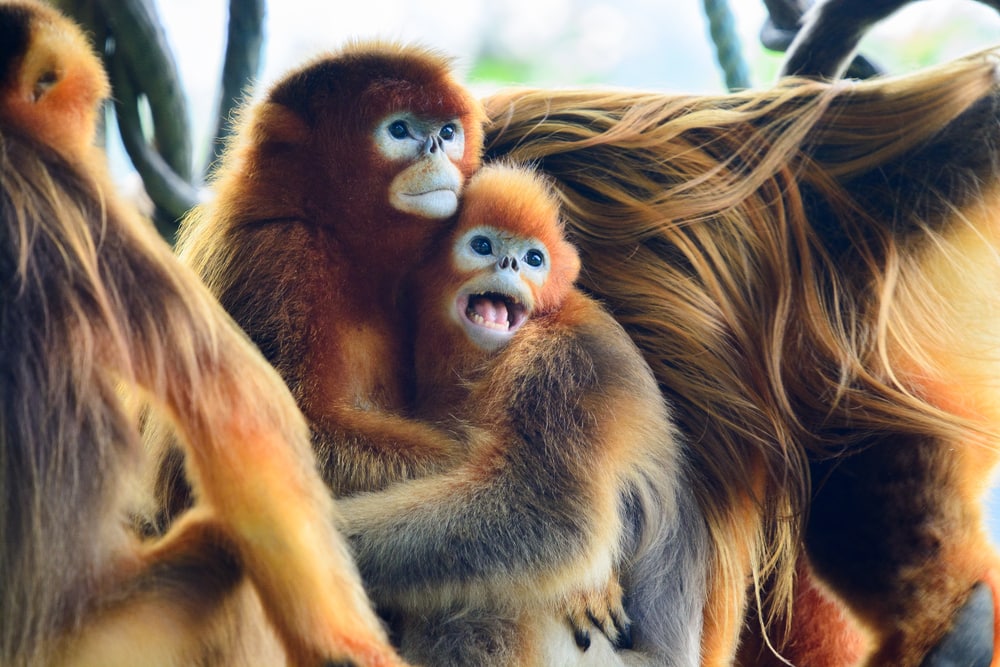
The gilded snub-nosed monkey is one of the almost beautiful monkeys in the world. Both males and females have bright golden bellies, necks, and foreheads.
Males accept grayish-black on their neck, artillery, shoulders, back, and tail. The same areas on the female are dark brown.
You lot'll observe these monkeys across the Tibetan Plateau of southwestern Mainland china. They handle the cold ameliorate than any other monkey alive. They are often plant at elevations of five,249-13,123ft (one,600-4,000m) above bounding main level.
Lifespan
- In Captivity: About 20-25 years
- In the Wild: Non described
three. Olive Baboon (Papio anubis) — Oldest-Living Monkey Species
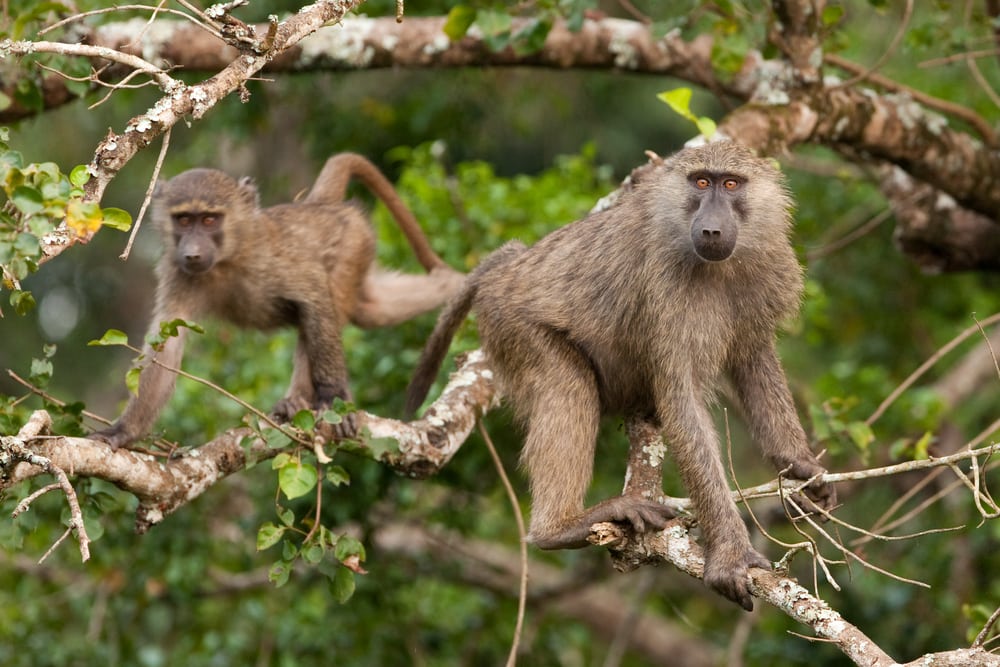
The olive baboon is broadly distributed across central sub-Saharan Africa. They prefer habitats of savannah, grassland, and rainforests.
Males often achieve twice the size of females and accept large canine teeth. They get their proper name from their coat which is of dark olive coloration.
Olive baboons likely take the longest lifespans of whatsoever other monkey species.
Lifespan
- In Captivity: 25-thirty years
- In the Wild: 25-30 years
4. Mandrill (Mandrillus sphinx)
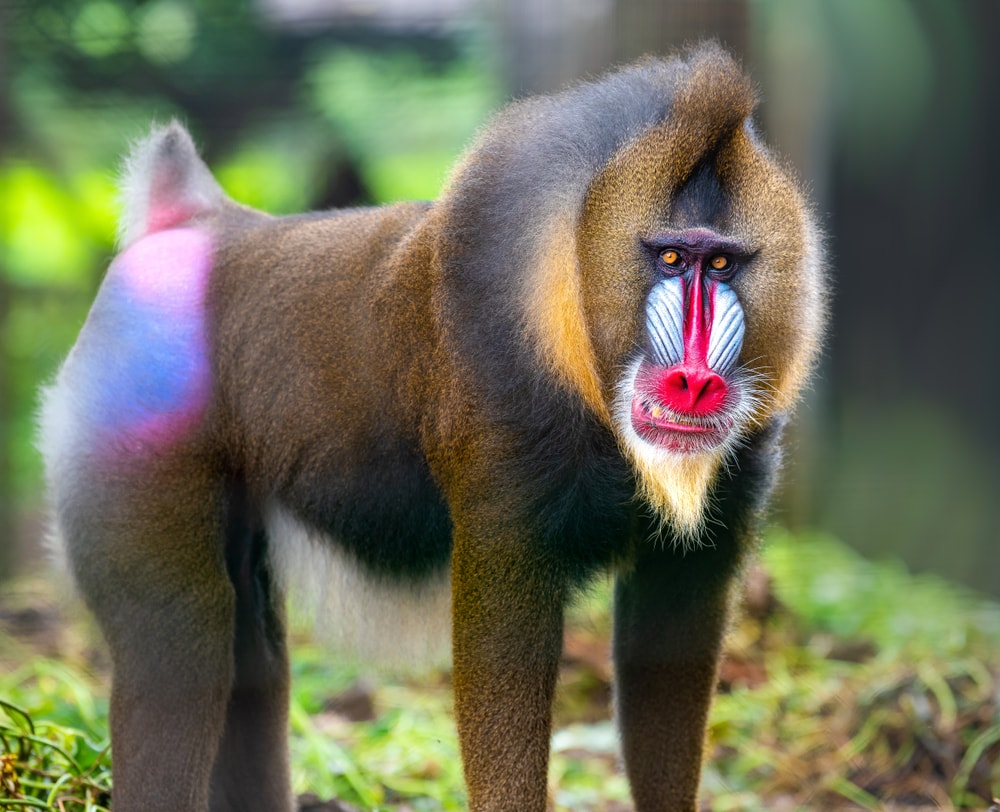
Mandrills alive across southwestern Cameroon, western Gabonese republic, Equatorial Guinea, and Southwestern Congo. They prefer habitats of tropical rainforests and montane forests.
They are most noticeable for their large heads and meaty bodies. In dissimilarity, they have long, strong limbs.
A key feature of these monkeys is their brilliant coloring which they use for communication. When they go excited, the blue of their buttocks and chest intensifies. They may besides develop red dots along their wrists and ankles.
Lifespan
- In Captivity: 32 years
- In the Wild: 46 years
5. Proboscis Monkey (Nasalis larvatus)
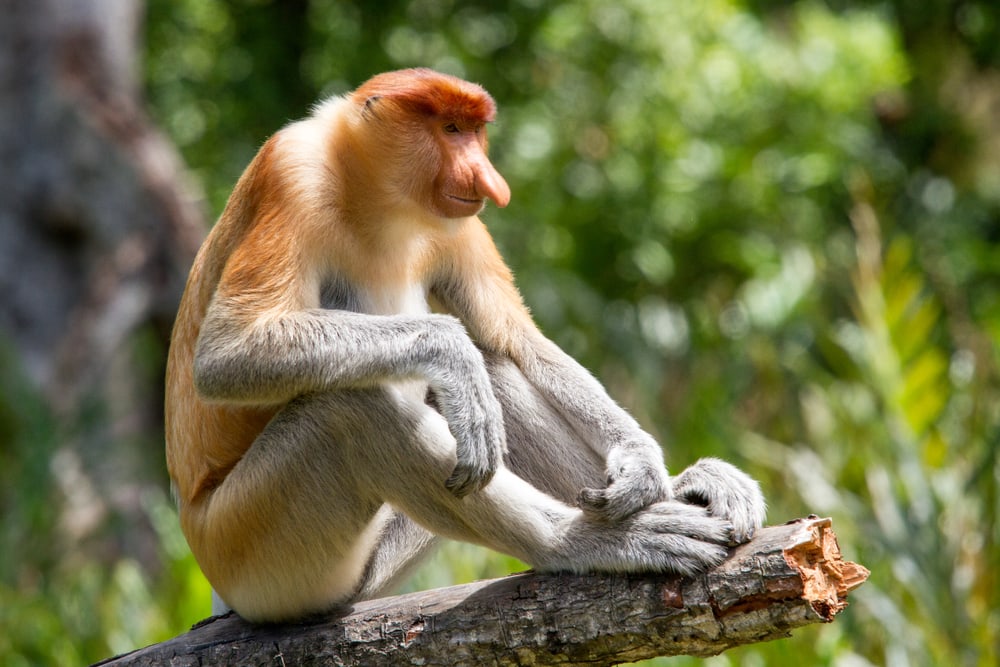
Proboscis monkeys only live on the island of Borneo, where they prefer to live well-nigh the declension. They inhabit mangrove forests found forth rivers, estuaries, swamps, and lowland rainforests.
Their most noticeable characteristic is their large nose. Only males have large noses, and they project vocalizations for meliorate communication.
Lifespan
- In Captivity: 23 years
- In the Wild: 13-twenty years
6. Japanese Macaque (Macaca fuscata)
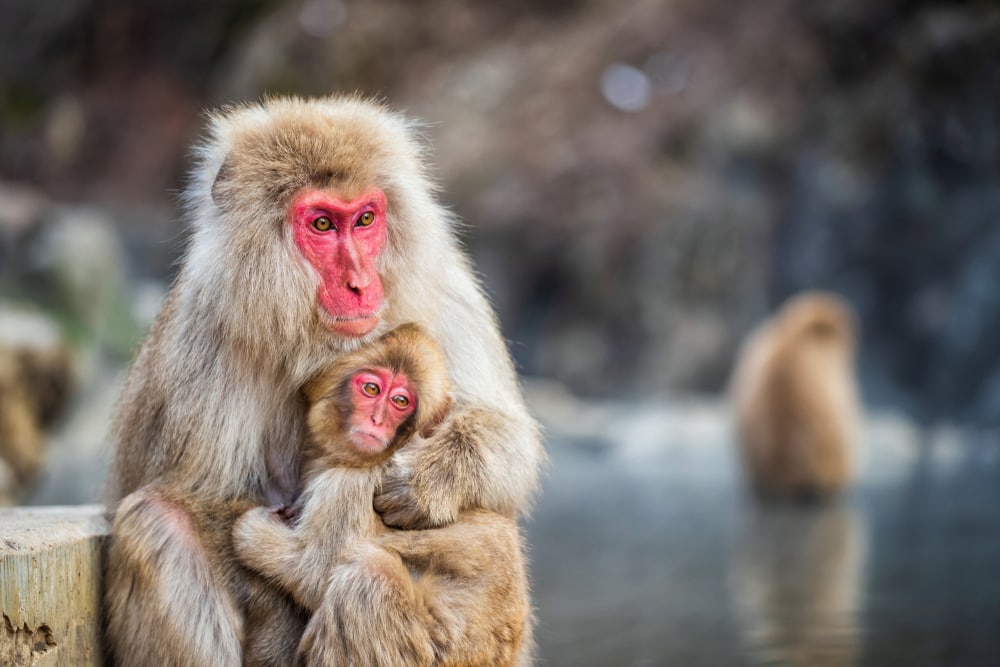
The Japanese macaque, or the snow monkey, is native to the southern islands of Japan. They are mainly found on the Honshu, Shikoku, and Kyushu islands.
They prefer subtropical and subalpine forest habitats. They live in areas with harsh winters that receive lots of rainfall.
These monkeys are known for their colorful faces and buttocks, which are red in colour. Their coats are very thick to keep them warm during the frigid winters. They as well have small, chubby tails.
Lifespan
- In Captivity: 33 years
- In the Wild: 23 years
7. Geladas (Theropithecus gelada) — The Virtually Mutual Monkey
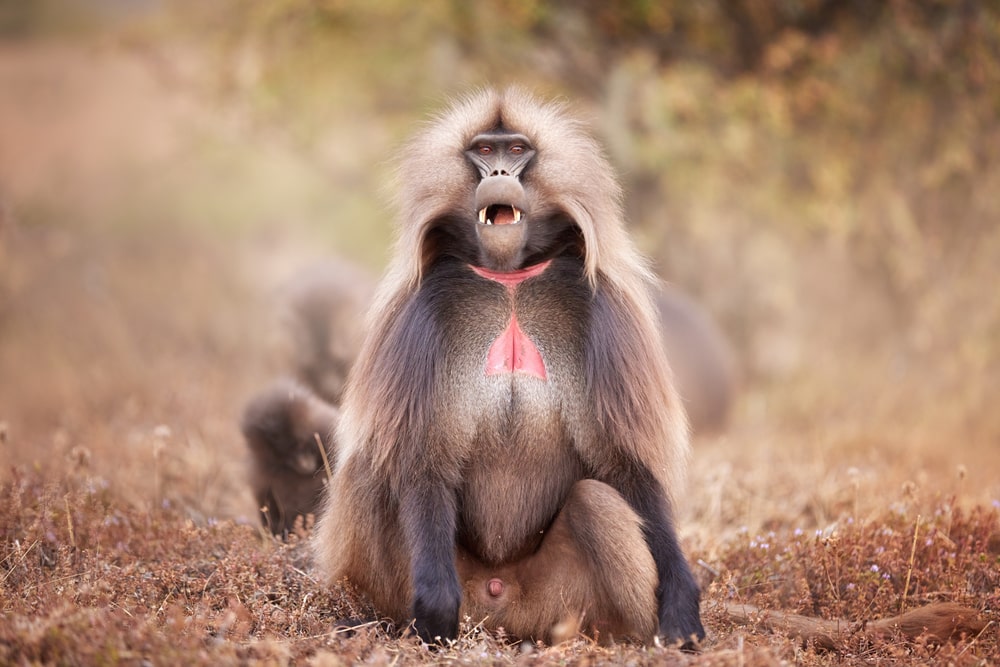
Geladas, or bleeding eye monkeys, are the almost populous monkeys in the world. They are outnumbered merely past humans and Muller's Bornean Gibbon, which is an ape, non a monkey.
They are native to the highlands of Federal democratic republic of ethiopia, where they get together in the Semien mountains. They are as well the most terrestrial non-human primates in the globe.
They live high upwards in the mountains, and so their fingers are brusque and stumpy for easier rock climbing.
Lifespan
- In Captivity: 30 years
- In the Wild: xx years
New World Monkeys
New World monkeys contain some of the world's shortest and oldest monkey species. The prosimians develop the quickest and also have the shortest lifespans.
New Earth monkeys live across S and Cardinal America and more often than not in copse. They have long, precipitous nails and no padding on their buttocks.
Their nostrils are wider and rounder in shape. Also, like humans, New Earth monkeys can run across in colour.
1. Common Marmoset (Callithrix jacchus)
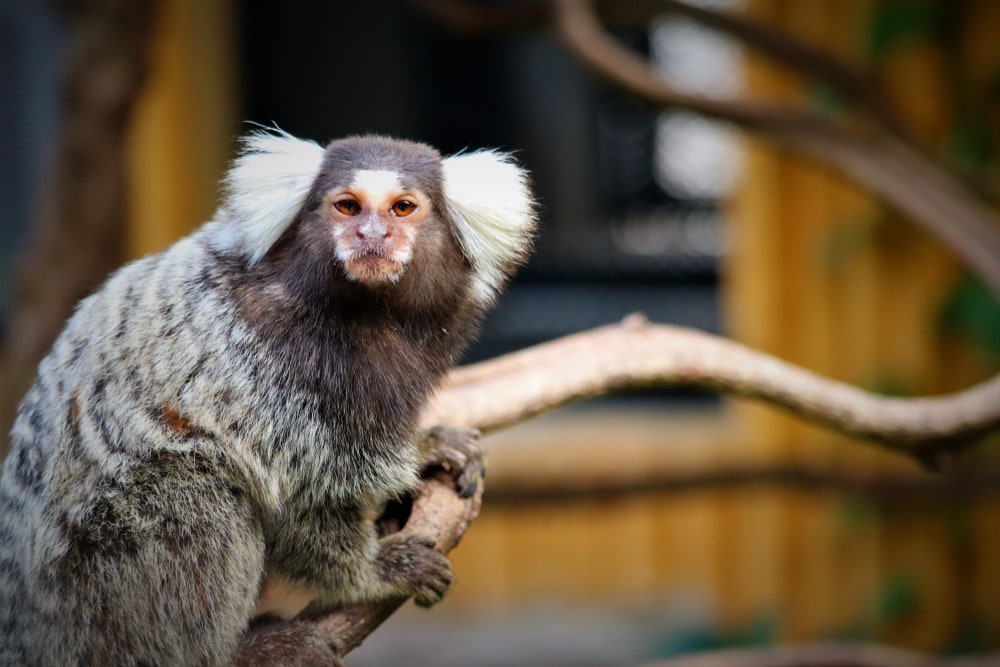
The common marmoset is also known as the white-tufted-ear marmoset. They live in the coastal rainforest of southeastern Brazil. They are native to northeastern Brazil. However, much of that habitat has faced destruction.
These monkeys are distinguishable by the white tufts of fur on their ears. They also have a white blaze of fur that runs beyond their forehead.
The balance of the fur on their head is dark brownish. The fur on their back is grayish-brown with light stripping. They besides have transverse stripping down their long tails.
Lifespan
- In Captivity: sixteen years
- In the Wild: ten years
2. Central American Spider Monkey (Ateles geoffroyi)
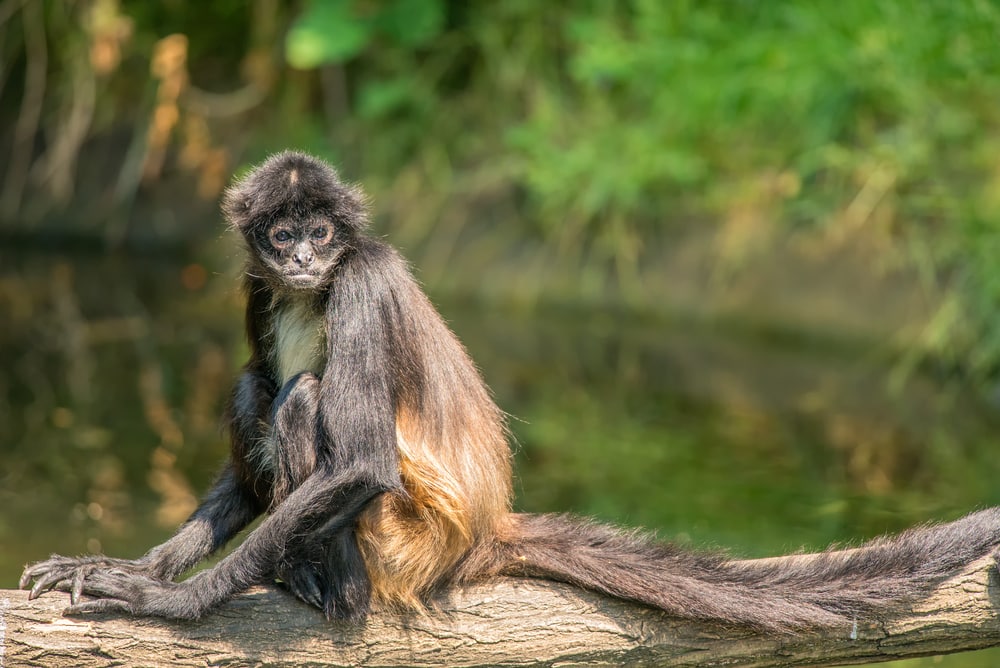
The Central American spider monkey is native to the coasts of Mexico. They alive in the northeast from Tamaulipas down to Jalisco in the southwest. They live as far west as northwestern Colombia. They prefer to live in mature rainforests and montane forests.
These monkeys are pocket-sized merely have extremely long tails and limbs compared to their body. They also have a small caput with a very long cage. Their upper body is black, brown, or reddish. Their face consists of low-cal-colored skin.
Lifespan
- In Captivity: 47 years
- In the Wild: 27 years
3. Pygmy Marmoset (Callithrix pygmaea) — The Smallest Monkey In the Earth
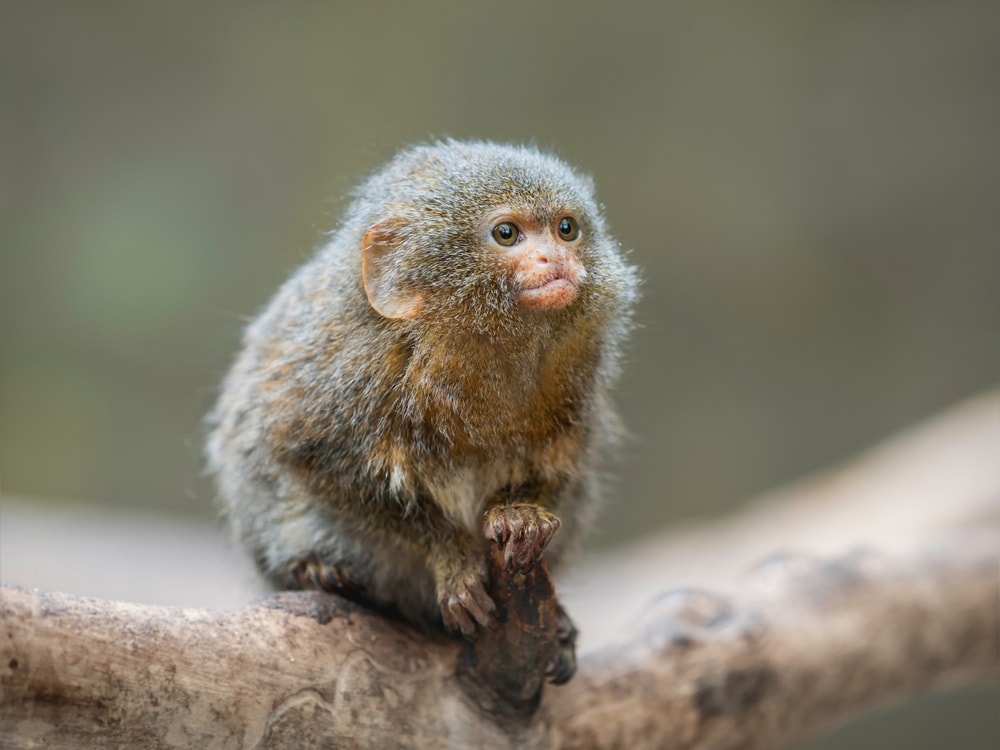
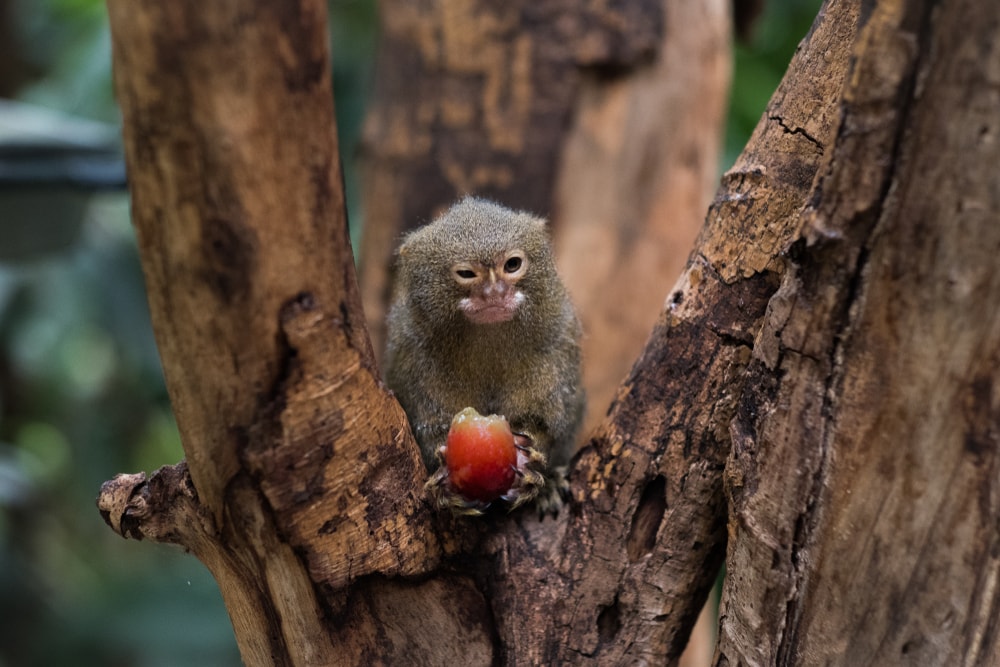
The pygmy marmoset is the smallest monkey in the earth, with an average trunk length of merely five.1 in (13 cm). Their bodies are brown and gray, but they have yellow, green, and black markings downwards their heads and backs. They also have long hair effectually their head and neck, giving the illusion of a king of beasts's mane.
These monkeys are native to Bolivia, Brazil, Colombia, Ecuador, and Peru. Their habitat spans the Andean foothills in Columbia and Republic of peru. Information technology goes northern into Bolivia and the Amazon Basin in Brazil.
They dearest to alive in multistratal river-edge forests. Almost of the time, yous can observe them in lower elevations. They also prefer to live within the understory of the copse rather than the canopies.
Lifespan
- In Captivity: 19 years
- In the Wild: 11-12 years
4. Emperor Tamarin (Saguinus imperator)
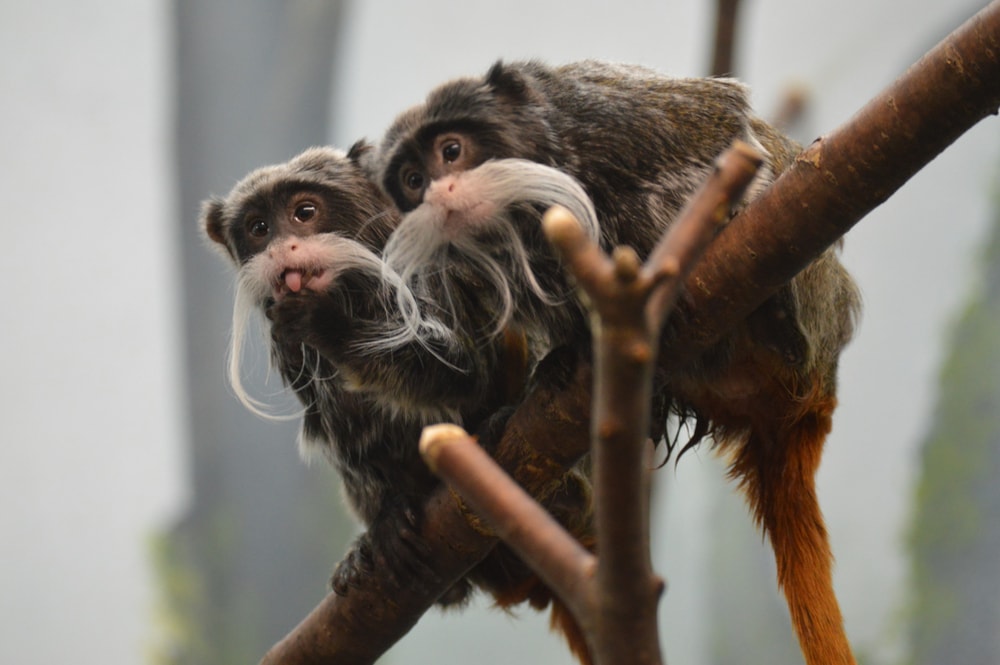
The emperor tamarin lives in southeast Peru, northwest Bolivia, and northwest Brazil. They live throughout the Amazon rainforest. Some populations also live near the Acre, Purus, and Jurua river drainages of Peru.
Emperor tamarins are small monkeys with tails that are longer than their bodies. Their bodies are generally gray, with some yellowish on their dorsum and blood-red speckling on their breast. The crown of their caput is a silvery chocolate-brown color. Their easily and anxiety are black, and their tail is reddish brown.
Lifespan
- In Captivity: 20 years
- In the Wild: 13 years
You may as well like: The vii Smallest Monkeys in the World: Pictures + Facts
What Factors Affect a Monkey'southward Life?
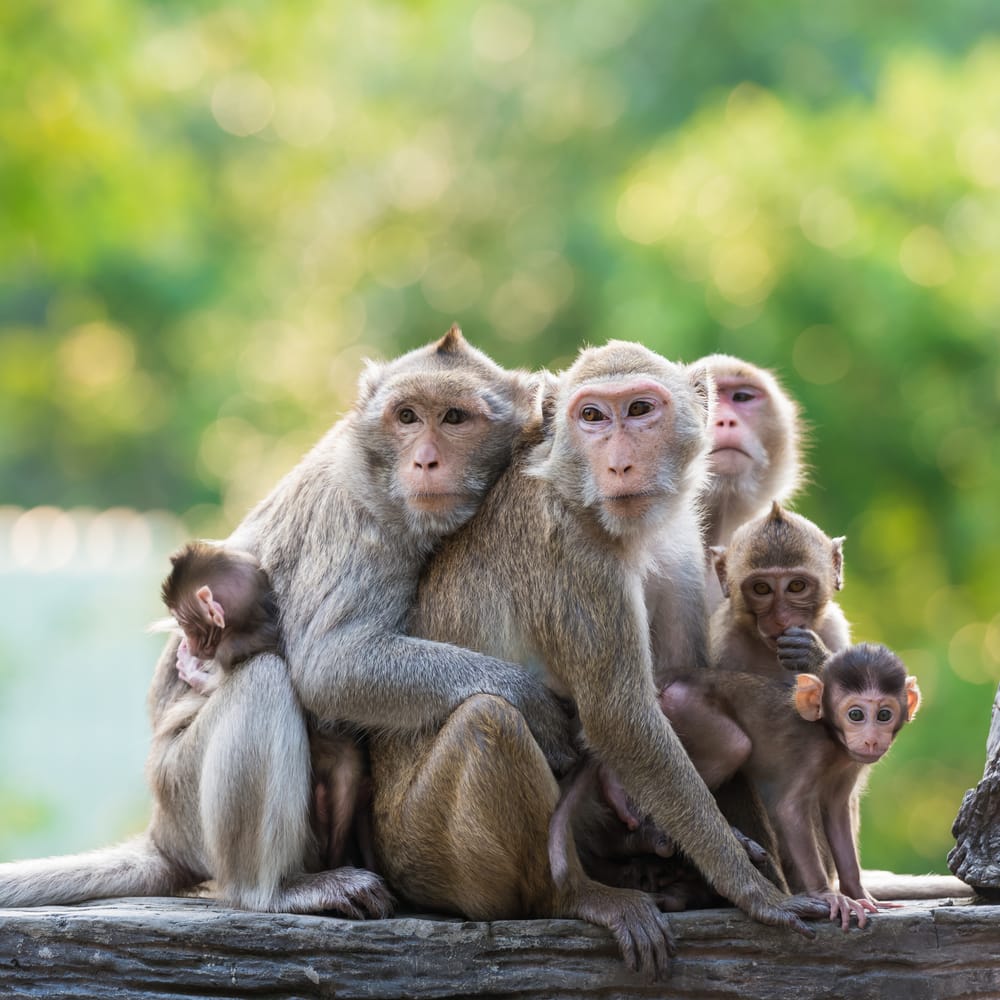
Many factors can influence how long a monkey will live. The main factor is their species. Some species simply live longer than others.
For example, Old Globe monkeys tend to be larger than their New World counterparts. Sometime World monkeys also tend to have longer lifespans.
Some other factor is their genetics. Like us, monkeys tin can develop illnesses, mutations, and fatal diseases.
All the same, the monkeys' biggest threat is humans.
Today, 60% of non-homo primates face the threat of extinction. Over 70% of primates beyond Asia alone are listed as vulnerable, endangered, or critically endangered by the IUCN Red List. 75% of primate species are facing failing populations.
Unless conservation becomes a priority worldwide, many of these species will go extinct.
The expansion of the human population is the main problem facing primates. Primates are rapidly losing their habitats due to expansion, logging, and agriculture. About 5 billion humans live close to non-human primates, and we are driving them out.
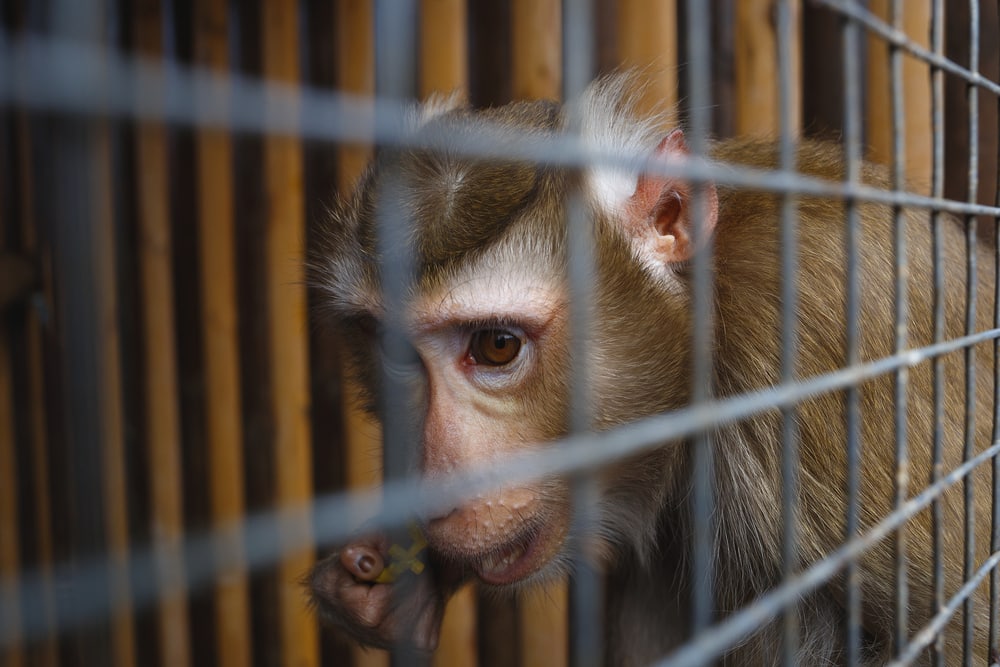
Hunting and the illegal pet trade are other man-acquired threats facing these animals. Hunting is an incredible concern in some areas. Russell A. Mittermeier, president of CI says, "In many places, primates are quite literally beingness eaten into extinction."
Not to mention climatic change which is exacerbated past human activeness. The burning and immigration of rainforests serve as the chief form of habitat loss. This burning is likewise responsible for over xx% of greenhouse gases.
Primates are the closest relatives to humankind. The fact that we won't protect a species so much like our own clearly shows how much danger nosotros pose to the rest of the world.
Yous may also like: All The 26 Different Types Of Apes: Pictures, Classification And Chart
FAQ
Are monkeys and apes the same?
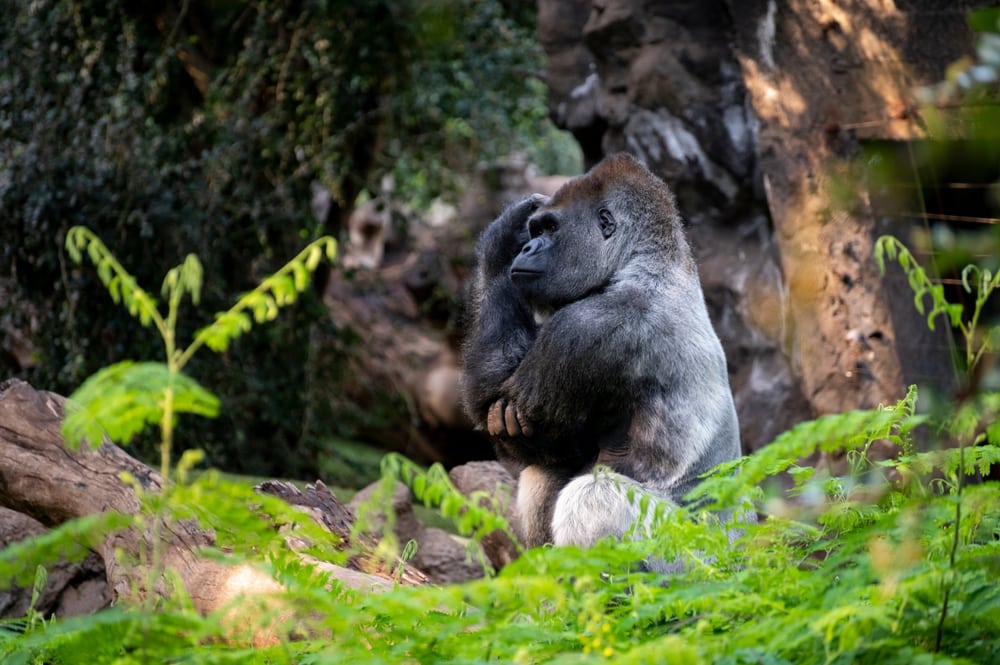
Monkeys and apes are primates with common features, simply they are not the same.
The easiest way to tell monkeys and apes apart is the presence or absence of a tail. Apes do non accept tails, while monkeys have long, flexible tails.
Their skeletal structures also differ.
Apes have a larger trunk structure and can walk in an upright posture. An ape's arms are longer than its legs, and its shoulders are strong and flexible. Their arms tin can straighten at the elbow, and their wrists and forearms are very flexible.
Monkeys are unable to walk in an upright position. Instead, they move on all fours. Their shoulders are smaller and more than narrow. They cannot fully straighten their arms, and their wrists are less flexible.
How long is an ape's lifespan?
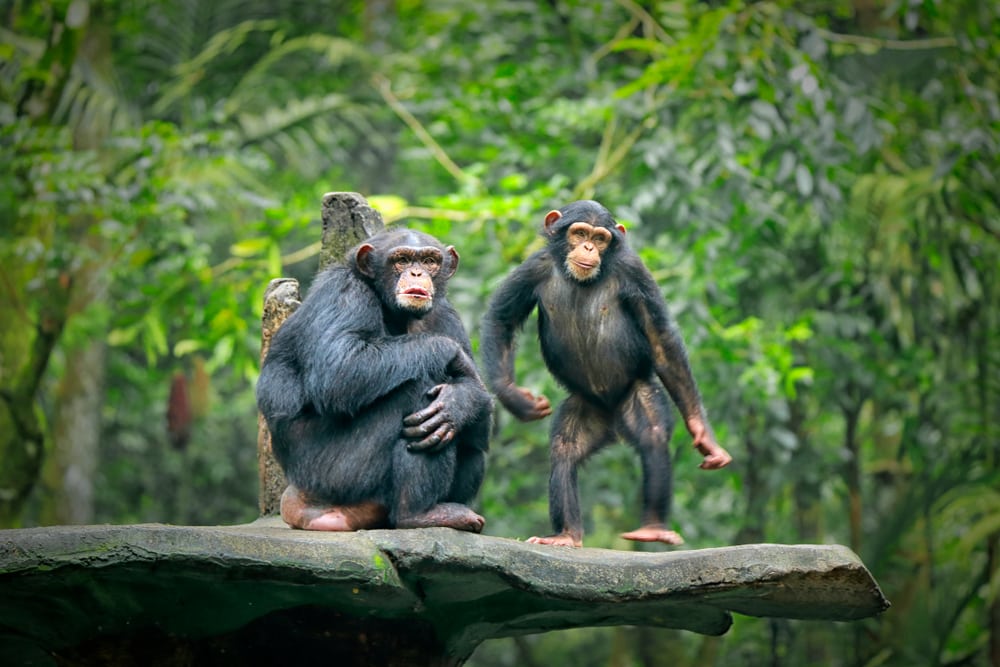
Apes also differ from monkeys in that they tend to live longer lives. Some chimpanzees and slap-up apes take lived for over 50 years. In rare cases, apes have been known to live even longer than this, rivaling humans.
Little Mama was a chimpanzee who lived at Lion State Safari theme park in Loxahatchee, Florida. She died at the ripe old historic period of 79 in November of 2017.
How old is the oldest monkey live?
At that place doesn't appear to be a record of the oldest monkey in the world. Just, a few individuals are incredibly old for their species.
Elvis is a spider monkey who lives at Zoo Boise in Idaho. Most spider monkeys alive somewhere between xx-twoscore years of historic period. But Elvis is an sometime monkey. He just celebrated his 60th birthday on July 6th, 2022.
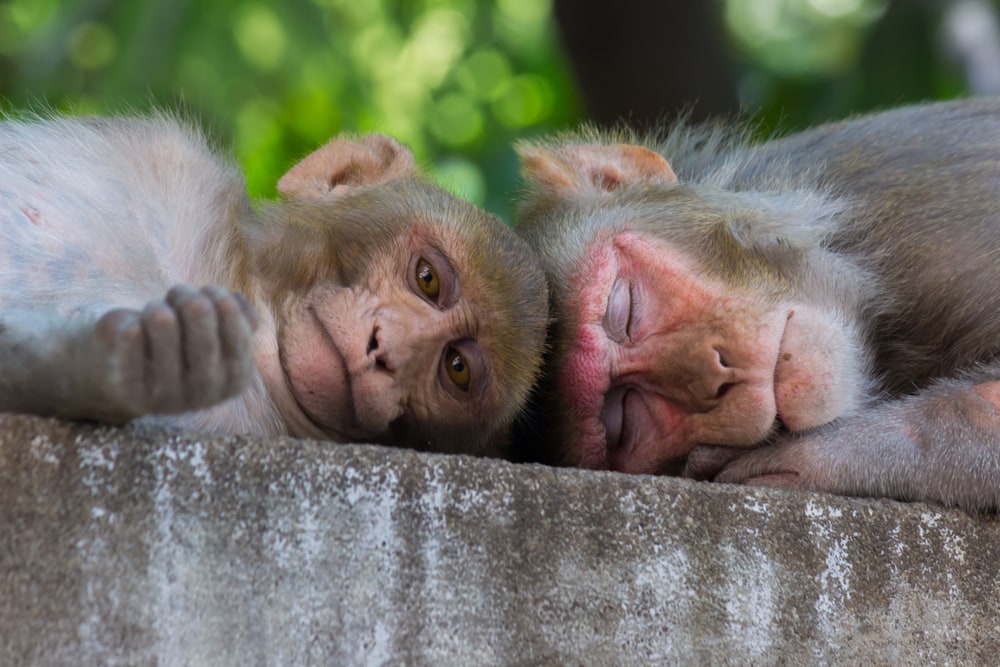
Isoko, the world'south oldest rhesus monkey, died at the Kyoto zoo on September 12th, 2021. The average lifespan of a rhesus macaque is fifteen years in the wild. They normally accomplish a maximum of 30 years in captivity. Isoko died at the old historic period of 43.
Practise monkeys historic period like humans?
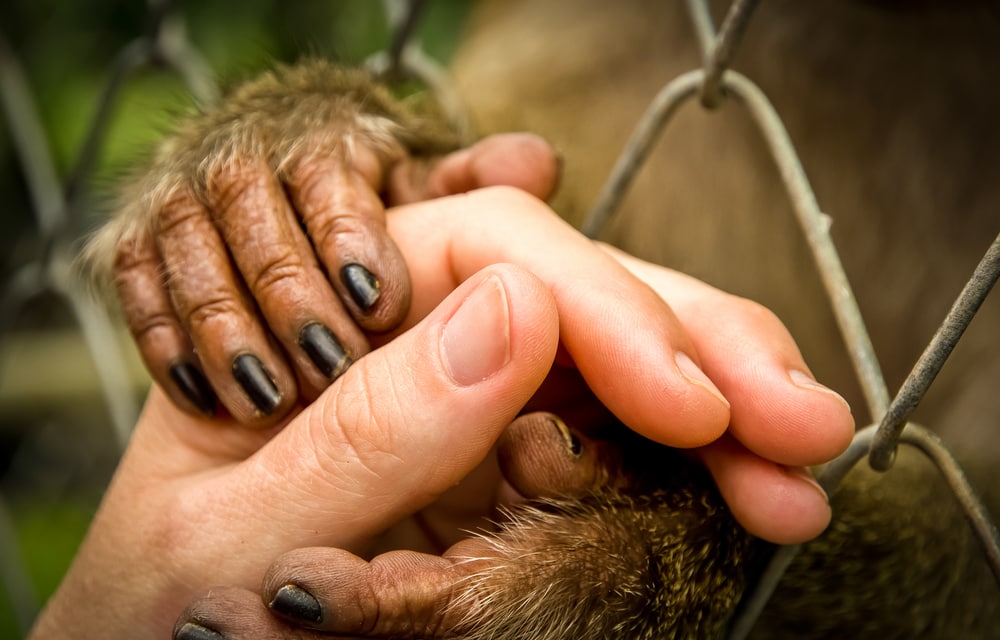
Studies testify that non-human primates age similarly to humans. Nosotros share similar rates of aging likewise as a similar gender gap concerning bloodshed.
Most mammals begin dying after they pass their reproductive prime number. For humans and other primates, this would be about middle historic period. But primates can live well past their reproductive "prime."
The study besides showed that male person non-human primates dice sooner than females.

Life Expectancy Of A Monkey,
Source: https://outforia.com/how-long-do-monkeys-live/
Posted by: ocasiogrou1983.blogspot.com
0 Response to "Life Expectancy Of A Monkey"
Post a Comment